
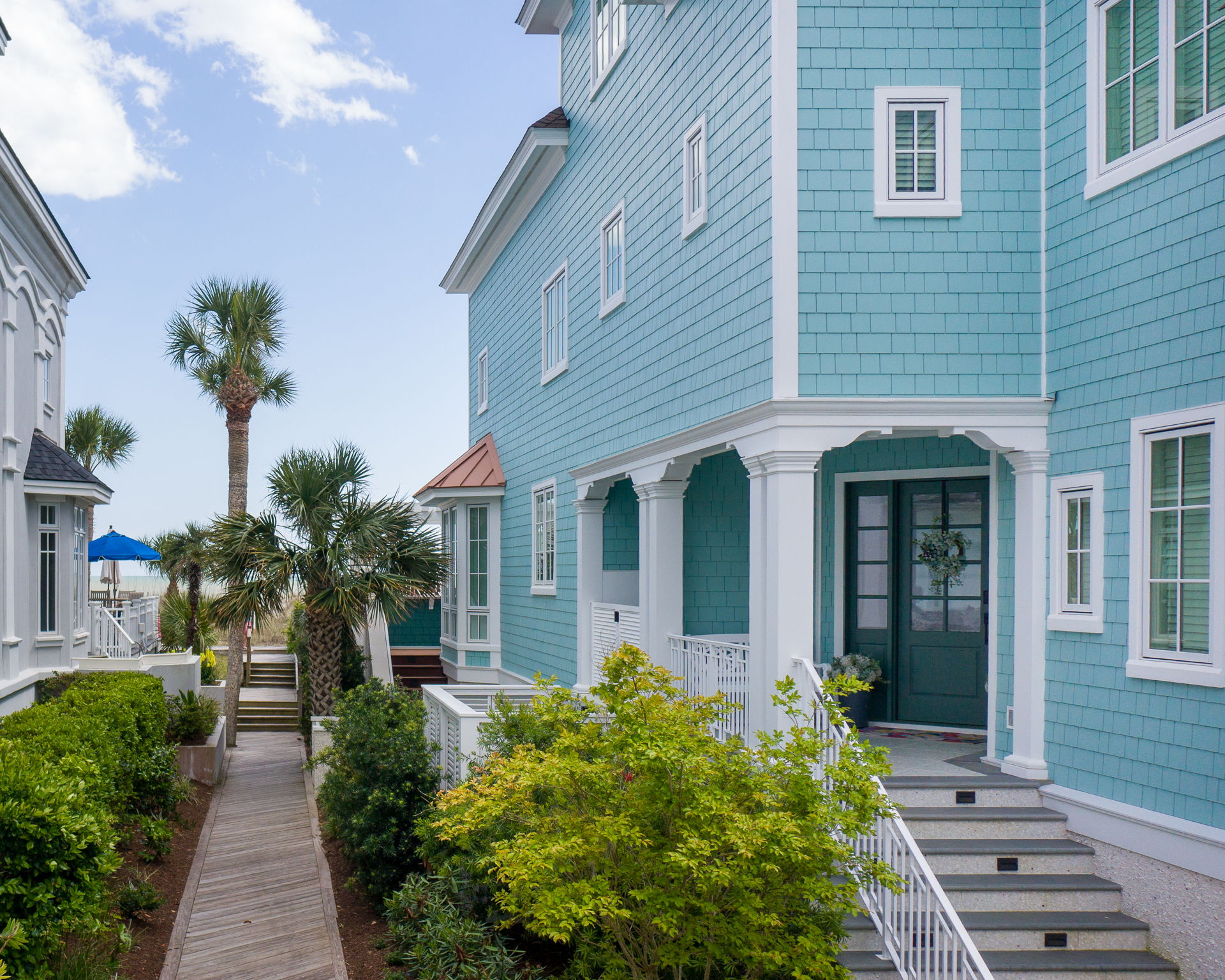
New Siding, Real Returns: What an Exterior Remodel Costs in 2026 and Why It Pays Off
Most homeowners we talk to want to sink their next budget into the kitchen or the primary bath. We get it. Those are the rooms you live in. But after years of residing homes on Hilton Head and across the Lowcountry, here’s what we’ve come to know: the exterior is the first thing a buyer, an appraiser, and every neighbor actually sees.
And when you look at the numbers behind a home exterior remodel, cost and ROI in 2026 consistently favor siding over almost any interior project you could name. New siding is one of the rare moves that protects the structure and the resale value at the same time. The catch, and it’s a big one, is that the material you choose and the quality of the install decide whether you get that return or just pay for a fresh coat over old problems. This is what we walk homeowners through before they spend a dollar.
Why Exterior Projects Are Dominating 2026 To-Do Lists
Walk any neighborhood this year and you’ll see it: painting, new front doors, fresh siding, refreshed landscaping. Curb-appeal and exterior projects are sitting at the top of homeowner to-do lists in 2026, and it isn’t a coincidence. A few forces are pushing people outside.
- Buyers judge from the curb. The first photo in a listing and the first ten seconds in the driveway set the tone for everything that follows. Tired, chalky, or warped siding tells a buyer “deferred maintenance” before they ever walk inside.
- Exterior work protects, not just decorates. Unlike a backsplash, your siding is a working part of the building. It’s the barrier between your framing and the weather. Letting it go doesn’t just cost you style points. It invites rot.
- The exterior ages in public. You can close the door on a dated bathroom. You can’t hide faded, cracked siding from the street, your neighbors, or a drive-by appraisal.
There’s an energy angle too. Modern siding systems, especially when paired with a fresh weather barrier and insulation upgrades at the same time, help your home hold conditioned air instead of leaking it. In our climate, where the air conditioning runs hard for most of the year, that shows up on utility bills, and it’s a selling point buyers increasingly ask about. And on the coast specifically, sound, well-installed siding factors into how insurable and weather-ready a home looks come storm season. That’s one more reason exterior work has moved up the priority list.
From where we stand, that’s the honest reason exterior projects keep climbing the list. They’re one of the few upgrades that pay you back in resale value and in the day-to-day protection of the home you’re living in right now.
Siding Material Breakdown: Fiber Cement, Engineered Wood, and How They Hold Up
Material choice is where an exterior remodel is won or lost. Two homes can spend a similar budget and get very different returns depending on what goes on the walls, and, here on the coast, how well it stands up to salt air, humidity, and storm season. Here’s how we walk homeowners through the main options.
Fiber Cement
Fiber cement is our go-to recommendation for most Lowcountry homes, and it’s the material that consistently tops national ROI rankings for siding. It’s dimensionally stable, non-combustible, and it shrugs off moisture, salt air, and the freeze-that-isn’t-really-freeze cycle we get down here. It holds paint well and resists the warping and pest issues that plague lesser materials. It sits at the premium tier on cost, but it’s premium precisely because it returns the most, in durability and in resale.
Engineered Wood
Engineered wood gives you the warmth and deep grain of real wood without the same vulnerability to rot and insects. It’s lighter to work with than fiber cement and lands in the middle on cost. For homeowners who want an authentic wood look, it’s a strong mid-tier choice, provided it’s installed with proper moisture management, which matters even more in a humid coastal climate.
Vinyl (For Contrast)
Vinyl is the value tier: the lowest upfront cost and a strong ROI because that entry price is easy to recoup. It’s a legitimate option for the right home and the right budget. Where we caution homeowners is on coastal exposure and long-term appearance. Quality varies widely, and cheaper vinyl can fade, crack, or rattle in high wind. Good vinyl, installed well, still earns its keep.
| Material | Durability | Maintenance | Coastal Performance | Cost Tier | Value Returned |
|---|---|---|---|---|---|
| Fiber cement | Excellent | Low | Excellent, resists salt, moisture, rot, fire | $$$ | Highest, tops ROI rankings |
| Engineered wood | Very good | Moderate | Good with proper moisture detailing | $$ | Strong |
| Vinyl | Good (quality-dependent) | Very low | Fair, choose higher grades near the water | $ | Strong (low entry cost) |
The takeaway we give every client: don’t shop on price alone. The material that returns the most is rarely the cheapest one on the truck. It’s the one matched to your home, your exposure, and how long you plan to own it.
What We Inspect Before We Reside a Home
This is the part that separates a lasting exterior remodel from an expensive cover-up. New siding hides everything behind it. If we don’t open things up and check what’s underneath, you’re paying to seal problems in, not fix them. Before we hang a single board, this is our pre-siding inspection:
- Rot in the sheathing and framing. We probe around windows, doors, and low corners, anywhere water tends to sit. Soft, punky wood gets replaced, not covered.
- Flashing at every penetration and transition. Windows, doors, rooflines, and wall-to-deck junctions are where leaks start. Old or missing flashing is one of the most common failures we find.
- The weather-resistive barrier. The house wrap or moisture barrier behind your siding is the real waterproofing layer. If it’s torn, degraded, or was never installed correctly, we address it before new siding goes up.
- Moisture intrusion and drainage. In our climate, trapped humidity is as dangerous as a leak. We look for staining, mildew, and grading or gutter issues that push water toward the walls.
- Insect and pest damage. Wood-destroying insects thrive in warm, damp conditions. We check for active or historic damage that needs remediation.
When a contractor skips this step, you get the job we usually get called to fix: beautiful new siding over rotten sheathing and failed flashing. It looks great for a year, then the same water problems resurface, now hidden and more expensive to reach. Doing it right the first time is the difference between a remodel that protects your home for decades and one that just buys you time.
Why a Coordinated Exterior Package Beats Piecemeal Upgrades
One of the biggest missed opportunities we see is the slow, one-thing-at-a-time approach: new siding this year, gutters two years later, paint whenever, trim when it finally fails. It feels safer on the budget, but it usually costs more and delivers less curb appeal. The same logic applies to bigger exterior investments, like an outdoor kitchen, that are far easier to plan and price while a crew is already on site.
The piecemeal approach:
- Colors, materials, and profiles rarely match when they’re chosen years apart.
- You pay for setup, mobilization, and labor over and over on separate visits.
- New siding next to tired trim and sagging gutters still reads as a half-finished house to a buyer.
- Water problems get solved in one spot while the untouched areas keep leaking.
A coordinated exterior package:
- Siding, trim, soffit, fascia, gutters, and paint are designed to work as one system.
- One mobilization, one crew, one timeline, which means less disruption and less duplicated labor.
- The whole facade reads as intentional and move-in ready, which is exactly what drives curb appeal and offers.
- Every water-management detail is handled together, so the drainage plan actually works as a whole.
There’s a practical side too. When one crew scopes the whole exterior at once, we can sequence the work so the water-management details (flashing, drainage, the weather barrier, and the way siding, trim, and gutters overlap) are all designed to shed water together. Do those piecemeal and the seams between last year’s work and this year’s become the exact places leaks like to start. A coordinated plan closes those gaps by design.
Curb appeal isn’t one product. It’s everything the eye takes in at once. That’s why a scoped, coordinated exterior remodel almost always outperforms the same dollars spent in scattered pieces.
The Resale ROI Behind an Exterior Remodel
This is where siding really makes its case. Almost no remodeling project recoups 100% of its cost dollar-for-dollar at resale. Kitchens and baths, for all their appeal, rarely come close. Siding is one of the rare exceptions.
Nationally, siding replacement consistently posts some of the strongest returns of any remodeling project. It commonly recoups a large majority of its cost, with fiber cement usually at the top and, in some national datasets, recouping at or above what it cost to install. (Those are national averages, not a quote for your home. Regional market, condition, and material all move the number.)
There are a few reasons siding does so well on ROI:
- It hits multiple buyer priorities at once: curb appeal, energy efficiency, weather protection, and the confidence that the home has been maintained.
- It takes a worry off the buyer’s plate. A buyer looking at fresh, quality siding isn’t quietly budgeting for a major exterior project in their first couple of years of ownership. That peace of mind shows up in stronger offers and faster sales.
- It protects the asset it’s attached to. Every other number on this list assumes the framing behind the walls is sound. Good siding is what keeps it that way.
And if the property is a vacation rental, the exterior does double duty. It’s the first thing a guest sees in the listing photos and the thing that keeps the structure sound through years of back-to-back bookings, so curb appeal protects both your nightly rate and your resale value.
So when we talk about a home exterior remodel and its cost and ROI in 2026, we’re really talking about one of the few projects that pays you back twice, in resale value and in the long-term protection of the structure. Interior projects can be gorgeous and still leave you underwater at resale. Siding rarely does. The exact return depends on your home’s size, condition, exposure, and the local market, which is why the honest next step is a walkthrough, not a number pulled off a national chart.
Schedule an Exterior Walkthrough With Roberts Construction
Every home wears differently, especially on the coast, where salt air, humidity, and storm season put siding to the test. The only way to know what your exterior remodel should include, and what kind of return it can realistically drive, is to have someone who’s done this for years walk the property with you.
That’s what we do. At Roberts Construction, we’ll inspect what’s behind your current siding, flag the rot, flashing, and moisture issues before they become expensive surprises, and scope a coordinated curb-appeal plan built around your home and your goals, not a stock package we hand every client.